
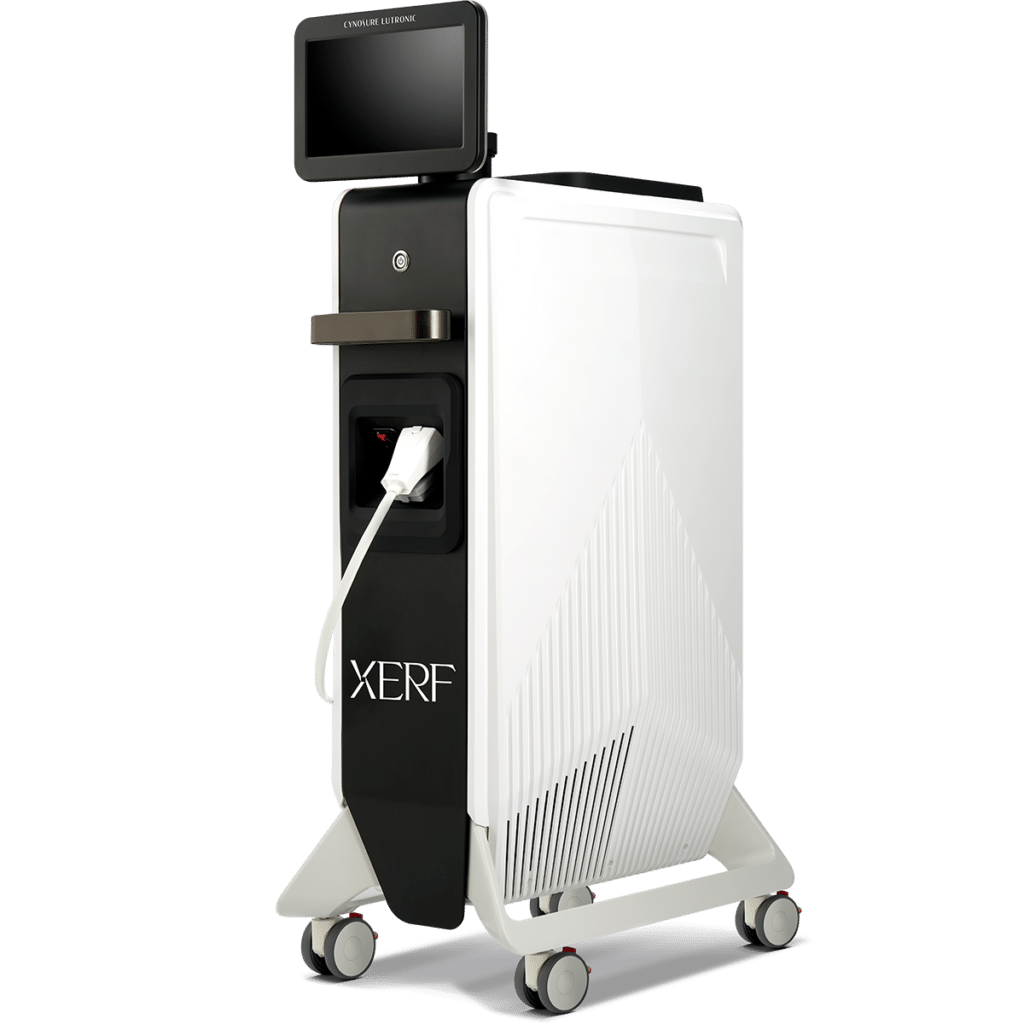
XERF is a non-invasive radiofrequency treatment designed to improve skin firmness, facial laxity and the appearance of wrinkles. It is often compared with established treatments such as 5th Gen FLX RF and Ultherapy PRIME, but the technologies work differently.
If you are considering XERF in Singapore, understanding these differences can help you choose a treatment that matches your skin concerns and expectations.
What is XERF?
XERF is a dual-frequency monopolar radiofrequency (RF) treatment developed by Cynosure Lutronic. It combines 6.78 MHz and 2 MHz RF energy in a single treatment system, with three depth settings and ten intensity levels. The aim is to deliver controlled heating across different tissue depths to support collagen remodelling and skin tightening.
Unlike conventional RF systems that typically use a single frequency, XERF is designed to provide a more adaptable approach to treating superficial, middle and deeper tissue layers. Its Wave Fit™ pulse technology, integrated cooling and real-time temperature monitoring are intended to improve treatment comfort and control energy delivery.
What does XERF do?
XERF is designed to improve the appearance of:
Facial and neck skin laxity
Fine lines and wrinkles
Loss of skin firmness
Lower-face laxity and jowls
Overall skin quality
The treatment is particularly appealing to patients who want non-surgical skin tightening without needles, numbing or significant downtime.
How does XERF work?
Radiofrequency energy heats tissue beneath the skin’s surface. This controlled thermal effect can stimulate collagen contraction and subsequent collagen remodelling, which may improve skin firmness over time.
XERF’s dual-frequency approach is designed to deliver energy across multiple tissue depths. The manufacturer also describes its system as using cooling and temperature monitoring to help control the treatment.
However, it is important to distinguish the technology’s intended mechanism from the degree of improvement an individual patient will actually experience. Results depend on factors such as skin laxity, tissue characteristics, treatment settings and the natural ageing process.
XERF vs 5th Gen FLX RF vs Ultherapy PRIME
| Feature | XERF | 5th Gen FLX RF | Ultherapy PRIME |
|---|---|---|---|
| Energy technology | Dual-frequency monopolar radiofrequency (RF) | Monopolar radiofrequency (RF) | Microfocused ultrasound |
| Main treatment focus | Skin tightening and collagen remodelling | Wrinkles, firmness and skin tightening | Non-surgical lifting and skin tightening |
| Treatment approach | Multiple RF frequencies and depth settings | RF heating with cooling and vibration | Focused ultrasound with real-time imaging |
| Real-time imaging | No ultrasound imaging | No ultrasound imaging | Yes |
| Pain | + | +++ | ++ |
| Best suited to | Patients interested in a newer RF approach with minimal pain | Patients seeking an established RF treatment | Patients with selected skin laxity who may benefit from deeper, targeted ultrasound treatment |
| Results | Gradual collagen remodelling | Gradual collagen remodelling | Gradual lifting and collagen remodelling |
Click here to read more about Ultherapy PRIME
Click here to read more about 5th Gen FLX RF
Does XERF hurt?
XERF is designed to be a comfortable, non-invasive RF treatment. The manufacturer describes it as requiring no numbing, needles or downtime. However, treatment comfort can vary depending on the area treated, the settings used and individual sensitivity.
As with any energy-based treatment, it is important that the treatment is performed by a trained medical professional who understands facial anatomy, tissue depth and appropriate energy delivery.
How long do XERF, FLX RF and Ultherapy PRIME results last?
Results from energy-based skin-tightening treatments are gradual rather than permanent. Treatments can be repeated every 6 to 12 months depending on patients’ need.
XERF studies have assessed outcomes at 30 and 90 days, while FLX RF and Ultherapy PRIME are also associated with gradual collagen remodelling over time. The duration of visible improvement varies between patients and depends on factors such as age, skin laxity, treatment settings and the natural ageing process.
It is important to remember that none of these treatments can reproduce the results of a surgical facelift. They are non-invasive options for patients who want improvement without surgery.
Our approach to choosing the right treatment
When we assess a patient for skin tightening, we do not start by asking, “Which machine do you want?”
We start by asking:
What is actually causing the ageing appearance?
Is it mainly:
Skin laxity?
Loss of collagen?
Fine lines?
Loss of structural support?
Volume loss?
Excess skin?
A combination of these?
Once we understand the underlying problem, we can decide whether XERF, FLX RF, Ultherapy PRIME—or another treatment—makes the most sense.
Final Thoughts
If you are considering XERF in Singapore, the most important step is to have a proper consultation with a doctor who can assess your skin laxity and recommend the treatment that is most suitable for you.
At SOL Aesthetics Medical Clinic, we believe in choosing the right treatment—not simply the latest treatment.